


HONOLULU (CN) - Two back-to-back Kona low storms have left Hawaii reeling from what Governor Josh Green is calling the state's worst flooding in more than 20 years.
The storms struck beginning March 10 and again on March 19, battering each island with torrential rainfall, landslides and debris flows. State officials estimate the damage could exceed $1 billion.
Green announced Tuesday that he formally requested a presidential disaster declaration from President Donald Trump under the Stafford Act. The move could unlock federal reimbursement for a significant share of eligible recovery costs.
"The scale of damage we are seeing, from washed-out highways to overwhelmed water systems, makes clear that federal partnership is essential," Green said in a statement. "We are doing everything we can at the state and county level, but this is exactly the type of event where [Federal Emergency Management Agency] support is critical."
If approved, the declaration would provide funding for debris removal, emergency protective measures and repairs to public infrastructure. It would also provide direct assistance for residents, including housing aid and disaster unemployment support.
Over several days, the storms dropped more than a foot of rain across many locations statewide, with some gauges on Maui reporting totals in the 40-inch range,
"There's no room left to absorb any more rain," said Stephen Parker, a meteorologist with the National Weather Service in Honolulu. "So pretty much all the rain that falls is turning into runoff."
More than 200 people were rescued during the second storm, according to state officials. No deaths have been reported.
Joint preliminary damage assessments with the FEMA are underway across all counties.
Hawaii's full congressional delegation, including Senators Brian Schatz and Mazie Hirono and Representatives Ed Case and Jill Tokuda, also sent a letter to Trump supporting the request. The lawmakers noted the storms come as the state continues to recover from the 2023 Maui and Hawaii County wildfires, which killed 102 people and destroyed more than 2,000 structures.
"State and county officials now need federal support for the extensive repairs required for flood-damaged homes, small businesses, roads, and public facilities across the islands," the delegation wrote.
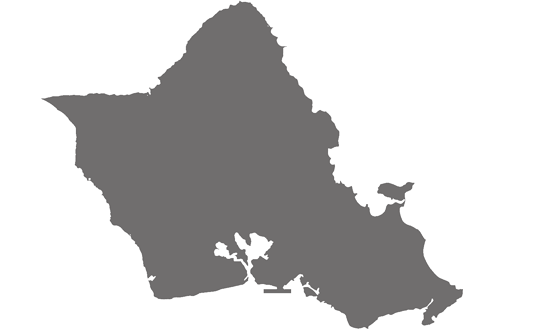
On Oahu's North Shore, where floodwaters lifted homes off their foundations and swept cars from driveways, evacuation orders for Waialua and Haleiwa have been lifted. Recovery efforts are ongoing.
The state has deployed water tanks in affected communities to ensure access to safe drinking water. A mobile clinic has been set up at Haleiwa Alii Beach Park. Kaiser Permanente also deployed a mobile clinic to Kula on Maui following the evacuation of Kula Hospital, which suffered significant water damage.
The flooding renewed concerns about the Wahiawa Dam, a 120-year-old earthen structure that federal officials classify as high hazard. During the second storm, water levels approached the threshold that triggers downstream warnings. In a public statement, Dole Food Company maintained that their dam held.
Farmers across the state also reported significant losses. A preliminary survey by Agriculture Stewardship Hawaii and the Hawaii Farm Bureau found more than $9 million in agricultural damage statewide.
In response, the Hawaii Department of Agriculture announced an emergency relief program offering one-time grants of $1,500 to affected farmers and ranchers. A total of $500,000 has been authorized, with additional loan assistance under consideration.
The storms have drawn comparisons to Hawaii's last major flood disaster, the 2004 Manoa floods.
A decision on the state's disaster declaration request is pending.
Source: Courthouse News Service