

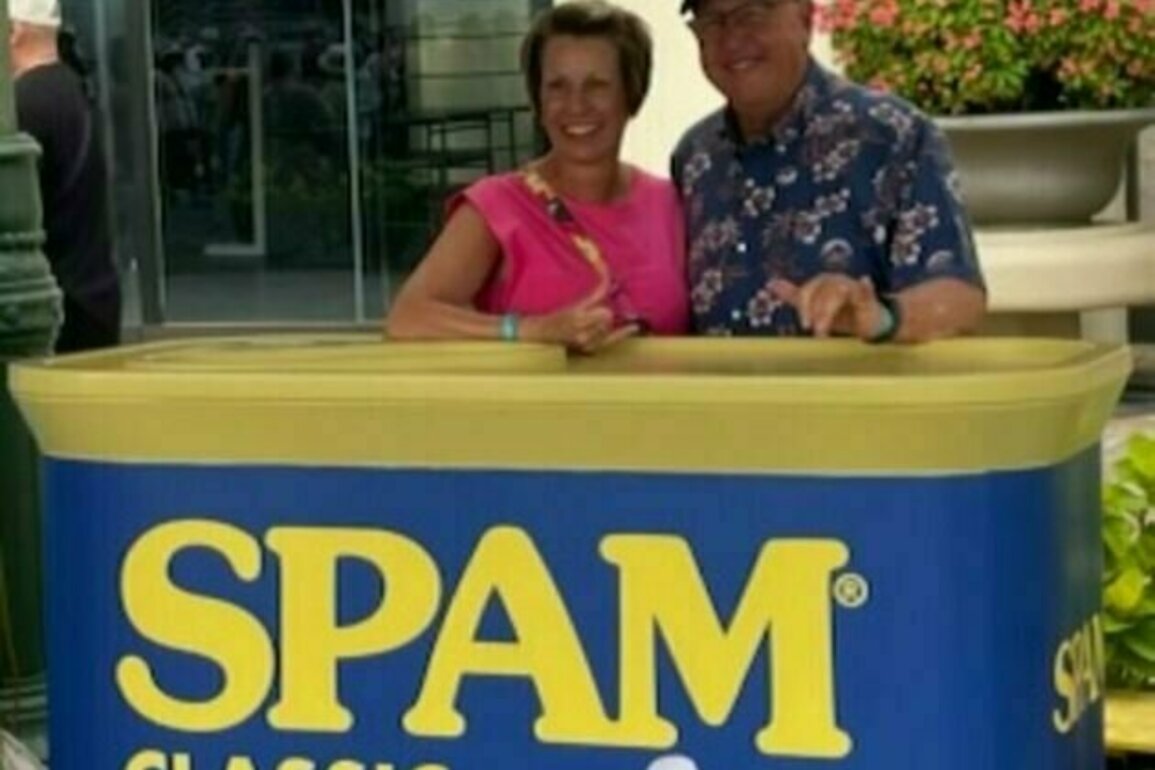
HONOLULU (CN) - Waikiki came alive with music, laughter and the sizzle of Spam Saturday evening as more than 30,000 visitors flocked to the annual Spam Jam, a festival celebrating Hawaii's favorite canned delicacy with bold, unconventional eats.
Spam - a processed meat made with pork, ham, salt, water, sugar, potato starch and sodium nitrite - has a love affair with the islands dating back to World War II.
"The true root of the island's love for SPAM products goes back to World War II, when the luncheon meat was served to GIs," Hormel Foods, the company behind the brand, says on its website. "By the end of the war, SPAM products were adopted into local culture, with Fried SPAM and rice becoming a popular meal."
The numbers speak for themselves. Hawaii consumes about 7 million cans of Spam annually - more per capita than any other U.S. state. And for locals like Samantha Komiyama, a 26-year-old sales rep for the Hawaii Visitors and Convention Bureau, Spam is a big part of everyday life.
"Spam is really such an important part of our culture," said Komiyama. "I know Spam has a bad reputation in the continental U.S. or even in other parts of the world, but here, we really celebrate it."
Komiyama attributes Hawaii's unique relationship with Spam partly to the islands' isolation. "Being on an island, everything is kind of shifted," she said. "We do have a lot of canned foods. We don't have as much produce as people on the mainland."
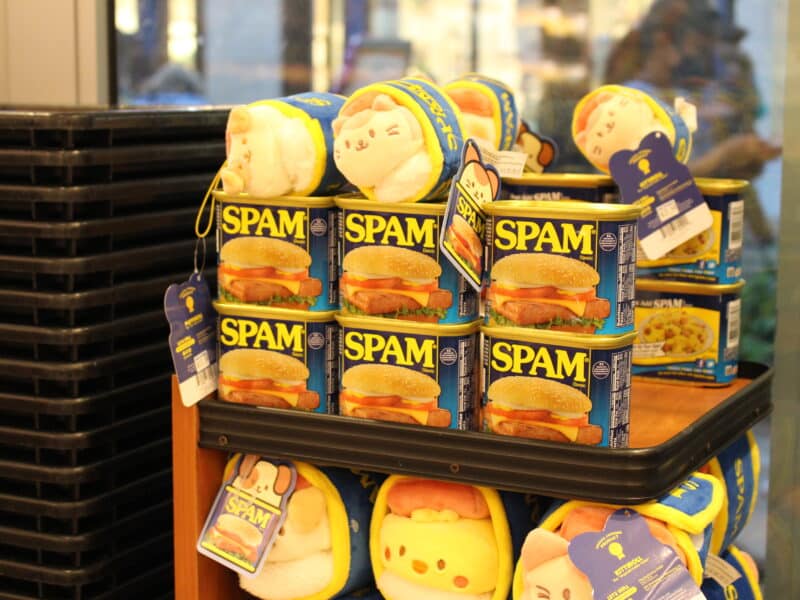
At the Spam Jam, attendees were treated to a cornucopia of Spam-themed delights. Merchandise ranged from Spam-themed jewelry and handbags to woodwork, T-shirts and pet accessories. Booths served everything from Spam nachos to Spam on top of gelato or covered in chocolate.
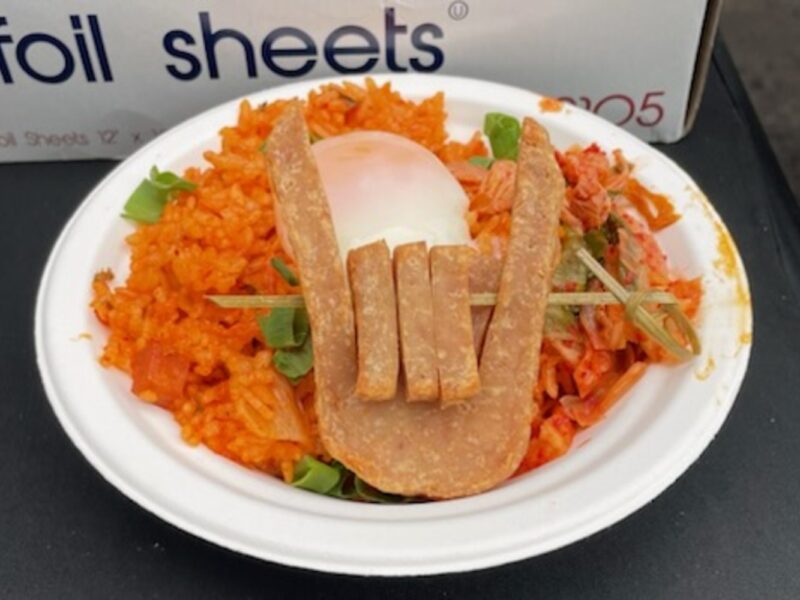
"I saw Spam nachos. That seemed fun," said Ryan Timme, 37, an energy engineer visiting from Salt Lake City with his wife, Kathleen. "There was Spam paella. I don't know. That seems like a clash of cultures."
Kathleen Timme, 38, a physician, was surprised to discover the event. "Our hotel was right by it, so we just stumbled on it. I heard that (Spam) was popular here. I am surprised that it's this popular.'"
Even for long-time residents like Lenora Shiota, 70, a retiree who lives in Mililani, the Spam Jam was a new adventure.
"I've always kind of wanted to go, so I decided to do it this year," Shiota said. "I'm seeing a good mix of tourists. They're probably curious about what the chefs are going to do with Spam. They probably only think of Spam and eggs or a Spam sandwich, not how creative some people can get."
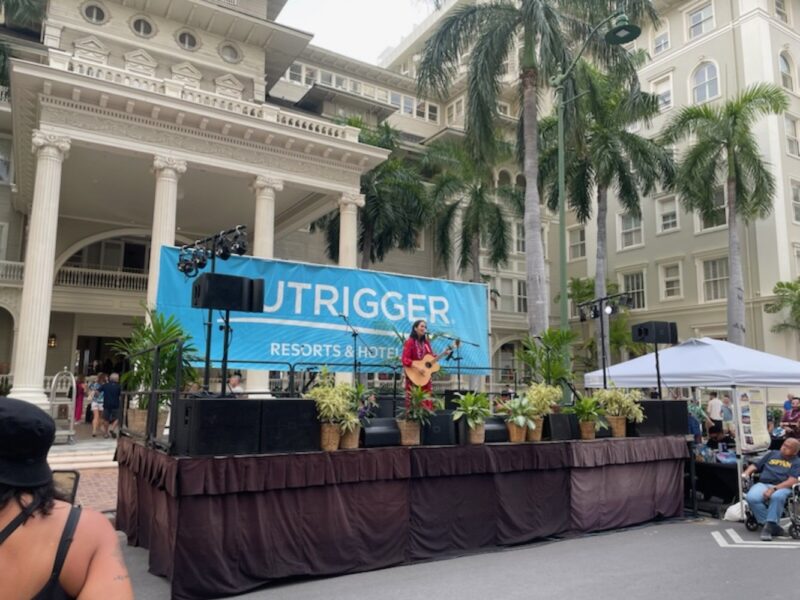
The festival included live performances across three stages, featuring local musicians and traditional hula dancers. As the evening drew to a close, attendees were treated to a drone light show.
Local colleges joined the action as well. Shawn Rolfs, 41, a hospitality and tourism major at Kapiolani Community College, volunteered as a photographer for a homework assignment.
"Oh, it's great. Good energy. Everyone's hanging out by the big Spam can, practicing their surf lessons with (cardboard cutouts of) Lilo and Stitch," Rolfs said.
Since its inception in 2002, organizers say the Spam Jam has evolved into a celebration of Hawaii's cultural diversity - which includes significant Chinese, Japanese, Filipino and native Hawaiian populations, among other groups.
"I don't like to think of Hawaii as a melting pot. We're more like a stew," Komiyama said. "As a stew, we all have individual components, like your carrots, potatoes, your Spam. We're all kind of mixed together, and we take each other's flavors and embrace them."
The festival has grown year after year, with Hormel estimating roughly 30,000-40,000 people in attendance this year.
"We really want to promote ethical tourism. And this is a good way to introduce our culture," Komiyama said. "We're not just some leisure destination. We actually have a culture, and we want to share it with you, if you want to listen."
Source: Courthouse News Service